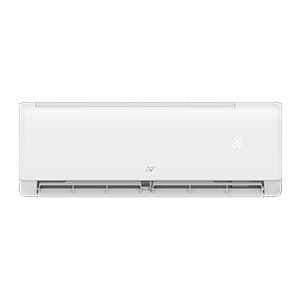
IQ Air Conditioners | Q Swift Fixed Speed

Q Swift R410a Fixed Speed

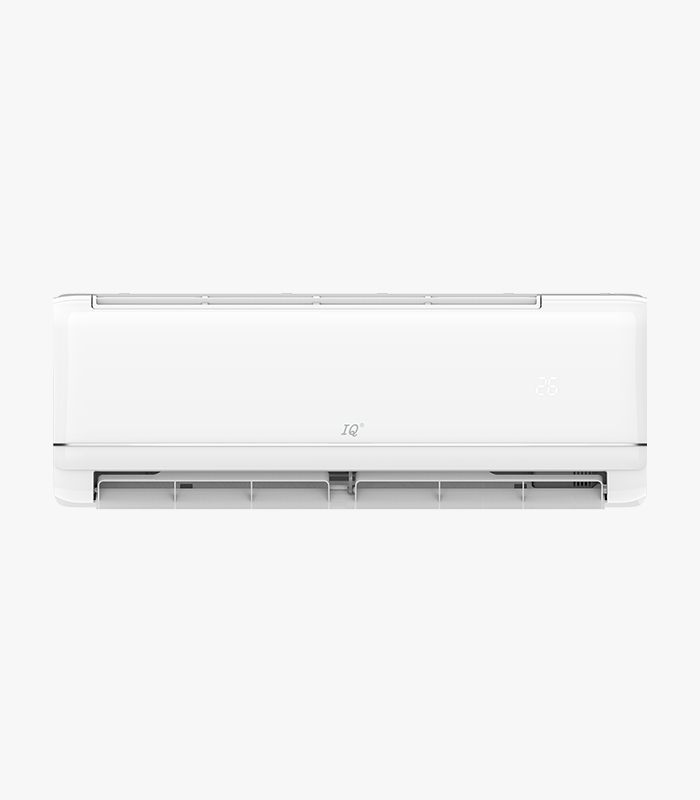
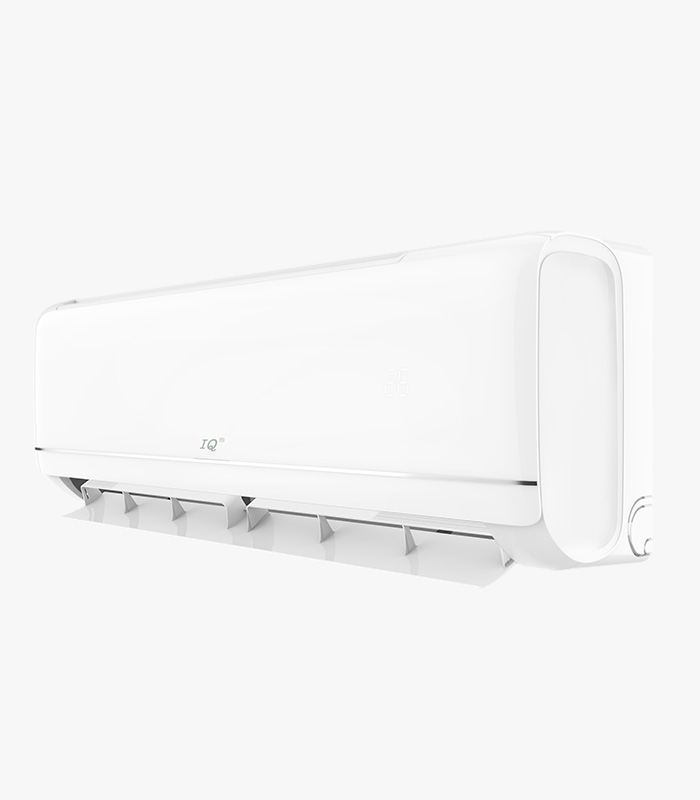
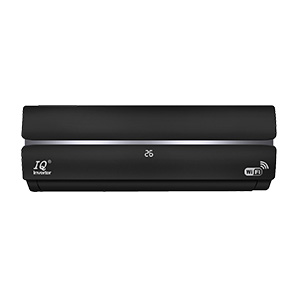
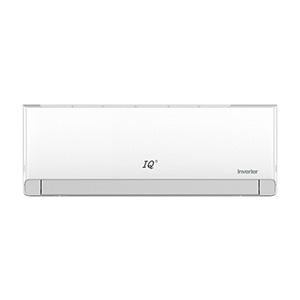
IQ® Q'Swift Air Conditioner

IQ® Q'Swift, a high-performance climate control system engineered to maximize comfort, hygiene, and energy savings. Built for versatile performance, it supports low-temperature cooling down to -15°C and includes a specialized 8°C heating mode.

MODEL: 
Sizes From: 9K Btu - 24K Btu

  • Description
  • Error Codes

Q Swift R410 Fixed Speed

Rapid Maintenance Design:

Direct PCB Installation lets you access the motherboard easily, allowing for disassembly and assembly without removing the middle frame. This streamlined design improves maintenance turnaround times by 50%, reducing labor costs and downtime.

Advanced System Protection:

The unit continuously monitors Freon levels via Fluoride Leakage Detection. If a leak is detected, the control system triggers an immediate shutdown to prevent terminal damage to the compressor, extending the overall lifespan of the unit.

Health & Hygiene:

Features High-Temperature Sterilization to ensure clean air output. The evaporator maintains a consistent temperature of 57°C during its heat-cycle to effectively sterilize internal components, neutralizing bacteria and mold growth.

Industry-Leading Energy Efficiency:

Redesigned PCB reduces standby power consumption from the industry average of 5W down to an Ultra-Low Standby of just 0.3W. Through Intelligent Power Management in the dedicated app, users can set specific energy targets while the unit utilizes an intelligent control algorithm to manage cooling output.
Troubleshooting & Diagnostic Codes

Refer to the comprehensive technical guide below to diagnose alerts reported by the internal system or the external panel LED indicators:

Code Error Explanation & Causes Inspection Procedure & Key Points LED Signal (1 / 2 / 3)
P1 Water full alarm: Tank full, float switch abnormally disconnected, or main control board failure. 1. Open the water tank plug behind the unit to release water completely. Power cycle the unit.
2. Check if the float switch is stuck or if it registers continuity under normal conditions. Replace if disconnected.
3. If the switch is normal, replace the main control board.
Light / Light / Off
P2 / PE High voltage switch protection: High-voltage switch opens 3 times within 20 minutes during standby or running. Frequently caused by low voltage switch cable, switch error, or fluoride leaks. 1. Verify terminal connection firmness on the main board.
2. Check cable continuity and low-voltage switch state (normally closed, abnormally open).
3. Inspect system pressure. If disconnected due to a system leak, fix and re-verify. Replace board if lines/switches are fine.
Off / Light / Light
P3 / 26 Fluoride deficiency protection: Lack of fluoride, closed stop valve, capillary blockage, coil sensor drift, or compressor failure. 1. Check refrigeration; if cooling performs normally, inspect if the internal coil sensor fell off or drifted.
2. Confirm stop valve is fully open.
3. Check compressor startup, capacitor values, and winding resistances.
4. Test system pressures (low suggests fluorine lack/blockage; high suggests 4-way valve gas bypass).
Off / Flash / Off
P4 Condenser overload protection: Outdoor coil sensor registers a high temp, restricting compressor frequency. Caused by system blockages, dirty condensers, fan errors, or bad resistors. 1. Measure outdoor disk sensor resistance (Standard: 20KΩ at 25°C).
2. Verify system pressure; high levels indicate poor heat transfer or pipe blocks.
3. Confirm whether the fan speed is running too low.
4. Test controller sensor partial voltage loop or replace the external controller.
/ / /
P5 / F2 Compressor discharge temp protection: Exhaust pipe registers protection states 3 times within 20 minutes. Caused by sensor drift, lack of fluoride, or system line blockages. 1. Measure exhaust temperature sensor resistance (Baseline: 50KΩ at 25°C). *Note: actual resistance varies based on active temps.
2. Check system pressures for abnormalities.
3. Replace the main control board if sensors and pressures check out.
/ / /
P6 Heating room high temperature protection: Triggered by internal coil sensor drift or airflow restrictions. 1. Check and remove any structural blocks around the indoor air inlets.
2. Inspect and thoroughly wash dirty filters.
3. Verify air output volume; check for an ash-fouled internal blower fan and clean it.
4. Measure internal coil sensor resistance drift at room temperature.
/ / /
P7 Indoor anti-freeze protection: Evaporation temperature drops below 0°C during cooling due to low ambient temps, dirty coils, or low refrigerant. 1. Feel the connecting pipe or evaporator; if not hot (<60°C), replace the 20KΩ coil sensor.
2. Clean the indoor filter.
3. Check for low fan speed; swap motor or internal board if speed is faulty.
4. Feel evaporator paths to see if one flow line is restricted or incorrectly welded.
5. Recover and weigh in exact factory refrigerant charge.
/ / /
P8 Outdoor unit overcurrent protection: Operating current values exceed set protection limits. Caused by transformer errors, control board defects, or lack of fluoride. 1. Check the current transformer loop to ensure the wire passes through the transformer with the correct number of turns (usually straight through).
2. Use a clamp meter to measure active unit current draw.
3. Ensure absolute line order mapping matches if replacing control boards.
/ / /